
Facebook Pixel

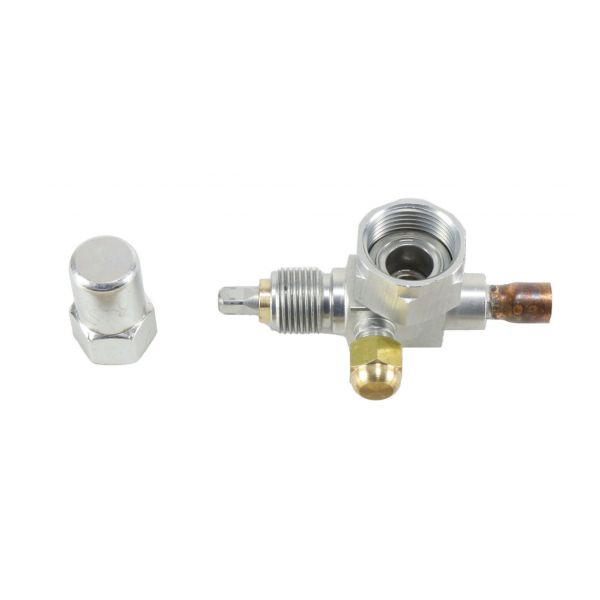
Copeland 510-7113-01 Rotolock Shutoff Valve

Special Price $64.90 Regular Price $74.63
In stock
SKU
510-7113-01
The Rotolock shutoff valve Copeland 510-7113-01 is manually controlled and meant for regulating refrigerants’ or liquids’ flow in HVAC systems. Brass was used in its making to ensure durability and therefore, the construction has the ability to grow old with time under adverse conditions ranging from -40°F to 250°F. This valve comes in different connection sizes i.e., 1/4" and 3/8" so as to meet the piping configurations’ requirements and withstand pressure levels of up to 500 PSIs. This allows for easy and fast operations where you only need to rotate the handle by a quarter turn to either on or off this valve. Application in various HVAC purposes such as shutting off refrigerant lines during maintenance works, isolating condensate drain lines or controlling by-pass loops.
Manufacturer:

https://www.partshnc.com/media/catalog/product/5/1/510-7113-01.jpg

Specifications

  • Temperature: -40°F to 250°F
  • Type: Rotolock Shutoff Valve
  • Connection Size: 1/4" and 3/8"
  • Pressure Range: 500 PSI
  • Material: Brass

PRODUCT OVERVIEW:
Refrigerant isolation is essential for safely servicing and maintaining compressor systems. Copeland 510-7113-01 Rotolock Shutoff Valve OEM is designed to control refrigerant flow and provide an isolation point within a compatible refrigeration circuit. Its Rotolock connection arrangement supports installation at equipment locations designed for this valve configuration.

REFRIGERANT ISOLATION AND FLOW CONTROL:
The shutoff valve operates by opening or closing the internal flow passage. When open, it allows refrigerant to pass through the connected circuit; when closed, it restricts flow to isolate the associated section. This function supports service procedures and maintenance involving connected refrigeration components.

ROTOLOCK CONNECTION:
The Rotolock connection provides a threaded mechanical interface for installation on compatible compressor or refrigeration piping connections. Proper alignment and sealing are important for maintaining a secure refrigerant connection. The valve must match the equipment's connection configuration and pressure requirements.

REPLACEMENT GUIDELINES:
Replace Copeland 510-7113-01 Rotolock Shutoff Valve when inspection confirms refrigerant leakage, damaged connection threads, physical deterioration, or failure of the valve to open and close correctly. Difficulty isolating the connected circuit may also indicate a problem with the valve mechanism. Verify the Rotolock connection dimensions, sealing arrangement, and compressor-specific fitment before replacement; refrigerant handling should be performed by a qualified technician.

COMMON FAILURE SYMPTOMS:

  • Refrigerant leakage develops around the valve body or Rotolock connection.
  • The valve fails to fully isolate the connected refrigeration circuit.
  • The shutoff mechanism becomes difficult to operate or remains stuck.
  • Visible corrosion or physical damage affects the valve or threaded connection.

EQUIPMENT COMPATIBILITY:
Copeland 510-7113-01 Rotolock Shutoff Valve OEM is intended for compressor and refrigeration applications requiring a matching Rotolock shutoff connection. Verify the compressor model, connection dimensions, and installation arrangement before selecting the replacement. Confirm the valve's pressure requirements, sealing configuration, and refrigerant-system suitability against Copeland equipment documentation.

TECHNICAL SPECIFICATIONS:
Product Identification:
Brand: Copeland
Part Number: 510-7113-01
Product Type: Rotolock Shutoff Valve
Valve Specifications:
Valve Function: Refrigerant Shutoff and Isolation
Connection Specifications:
Connection Type: Rotolock

Write Your Own Review
You're reviewing:Copeland 510-7113-01 Rotolock Shutoff Valve
Your Rating
Customer Questions
What maintenance is required for the Copeland 510-7113-01 Rotolock Shutoff Valve?

Periodically inspect the valve for leaks, corrosion, or buildup. Operate the valve fully open and closed to ensure smooth movement. Tighten fittings if needed and clean around seals carefully. Proper maintenance prevents leaks and ensures accurate system control.

What are common issues with the Copeland 510-7113-01 Rotolock Shutoff Valve?

  • Leaks around valve stem or connections.
  • Difficulty turning or stiff operation.
  • Corrosion or mineral buildup.
  • Incomplete shutoff causing system inefficiency.

What is the primary function of the Copeland 510-7113-01 Rotolock Shutoff Valve in a refrigeration system?

It provides a means to isolate refrigerant flow through a connected line, supporting compressor servicing and refrigeration-system maintenance.

How does the Copeland 510-7113-01 Rotolock Shutoff Valve control refrigerant flow?

Its manual shutoff mechanism opens or closes the refrigerant passage, allowing flow during normal operation or isolating the connected section when closed.

Which connection and system details matter when matching the Copeland 510-7113-01 to an existing installation?

Check the compressor connection arrangement, Rotolock fitting configuration, refrigerant application, valve orientation, and manufacturer-approved replacement information.

What conditions can affect the sealing and shutoff performance of the Copeland 510-7113-01?

Worn sealing surfaces, damaged threads, corrosion, or internal debris can interfere with proper valve closure and refrigerant containment.

What signs may indicate that the Copeland 510-7113-01 Rotolock Shutoff Valve needs inspection?

Refrigerant leakage around the valve, difficulty operating the shutoff mechanism, or failure to isolate the connected line may indicate a valve problem.

Installation Steps

Step 1: Shut off power and isolate the refrigeration system; depressurize lines before handling.

Step 2: Remove access panels and clean pipe ends to ensure proper sealing and alignment.

Step 3: Position the new Rotolock valve and hand-thread the connections to avoid cross-threading.

Step 4: Tighten fittings to manufacturer torque specs using appropriate tools; avoid over-tightening.

Step 5: Restore system pressure, check for leaks, and verify safe operation.